
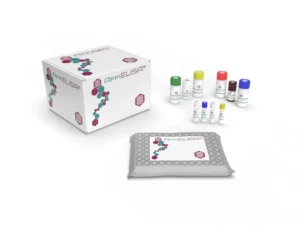
The Mouse NAD(P)H-hydrate epimerase ELISA is a highly specialized assay used to detect and quantify the presence of NAD(P)H-hydrate epimerase, an enzyme that plays a crucial role in maintaining cellular redox balance. This enzyme is significant in the regulation of reactive oxygen species (ROS) and the proper functioning of metabolic pathways. In this article, we will explore the technical aspects, applications, and benefits of this ELISA kit in research and diagnostics.

Key Features of Mouse NAD(P)H-hydrate Epimerase ELISA
- High Sensitivity: This ELISA kit is designed to detect extremely low concentrations of NAD(P)H-hydrate epimerase in mouse samples. Its sensitivity ensures accurate quantification even in samples with minute enzyme levels.
- Learn more about ELISA sensitivity at NIH.
- Specificity: The antibodies used in the kit are highly specific for the NAD(P)H-hydrate epimerase enzyme, ensuring that only the target molecule is detected without cross-reactivity.
- Find out more about antibody specificity from CDC.
- Wide Detection Range: The assay offers a broad dynamic range, making it suitable for both low and high concentrations of the enzyme, allowing for flexibility in experimental design.
- Learn about detection ranges in ELISA at NCBI.
- Quantitative Accuracy: The use of standard curves in the ELISA allows for precise quantification of the enzyme concentration, ensuring reliable and reproducible results across multiple experiments.
- For more on ELISA quantification techniques, check FDA.
- Fast and Reliable: The kit is optimized for rapid detection, with a short incubation time, making it efficient for laboratories requiring quick turnaround times.
- Explore fast assay protocols at NIH.
Applications of the Mouse NAD(P)H-hydrate Epimerase ELISA
This ELISA kit is primarily used in metabolic research, cell biology, and oxidative stress studies. Some of its common applications include:
- Metabolic Pathway Analysis: By quantifying NAD(P)H-hydrate epimerase levels, researchers can better understand its role in regulating the balance between NADH and NADPH, which are critical for energy production and biosynthetic reactions.
- Learn about metabolic pathway research at CDC.
- Oxidative Stress Research: Since NAD(P)H-hydrate epimerase is involved in the redox balance, this ELISA can be used to study its effects on ROS levels and oxidative damage in cells.
- Find resources on oxidative stress at NCBI.
- Disease Biomarker Studies: The epimerase is also investigated as a potential biomarker for metabolic disorders and certain types of cancer. This assay allows researchers to measure enzyme levels in disease models.
- Explore biomarker research at NIH.
Procedure and Workflow
The Mouse NAD(P)H-hydrate Epimerase ELISA follows a standard sandwich ELISA format, where a specific antibody captures the enzyme from the sample, and a secondary antibody, linked to an enzyme, facilitates the detection through colorimetric readouts. The step-by-step protocol is as follows:
- Sample Preparation: Prepare mouse tissue or serum samples, ensuring that they are free from interfering substances.
- For guidelines on sample preparation, check FDA.
- Capture Antibody Binding: The sample is added to a plate pre-coated with the capture antibody, which specifically binds to NAD(P)H-hydrate epimerase.
- Learn more about ELISA plate preparation at USDA.
- Secondary Antibody and Detection: A biotin-conjugated secondary antibody is introduced, followed by a substrate that produces a colorimetric signal proportional to the enzyme concentration.
- Visit NIH for more details on detection methods.
- Reading the Results: The absorbance is measured using a microplate reader, and the concentration of NAD(P)H-hydrate epimerase is determined by comparison to a standard curve.
- For more on ELISA result interpretation, visit CDC.

Conclusion
The Mouse NAD(P)H-hydrate Epimerase ELISA is an essential tool for researchers studying metabolic pathways, redox biology, and disease biomarkers. Its high sensitivity, specificity, and fast detection make it an invaluable resource in both academic research and clinical studies. By providing precise and reliable quantification of NAD(P)H-hydrate epimerase, this ELISA kit enables scientists to gain deeper insights into the role of this enzyme in health and disease.